Scuba diving in Raja Ampat
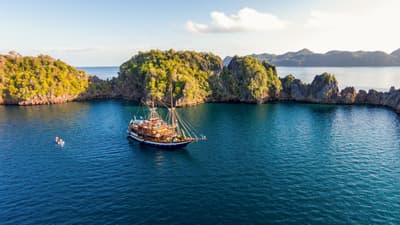
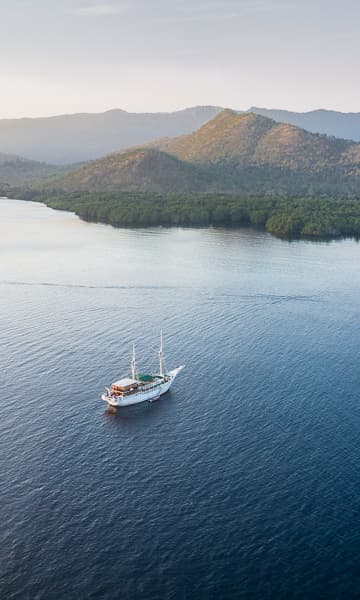
Located off the northwestern tip of Papua, Raja Ampat’s diving offers some of the most exciting underwater experiences in Southeast Asia, if not the world. The marine diversity of these islands is staggering and, quite literally, like nowhere else on earth. From the fabulous hard coral sites in the north to the colourful soft corals of Misool in the south - as well as the abundant marine life that has made the region so famous - Raja Ampat is truly the ultimate reef diving destination. Stay at a beachfront dive resort and spend your days exploring the Dampier Strait, or join a liveaboard to reach remote reefs and anchor among the limestone islands of Misool.
Overview
Overview
Raja Ampat lies off the western tip of Indonesian Papua, within the Coral Triangle. Its name translates to ‘Four Kings’, a reference to the four large islands of Waigeo, Batanta, Salawati and Misool. These are all surrounded by hundreds of smaller islands, from forested limestone towers to low sandy islets.
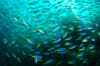
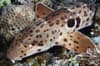
Divers travel to this remote corner of Indonesia for the sheer abundance of life underwater. You can start the day watching vast schools of fish gathering at a reef corner in the current, then admire trains of manta rays circling overhead. There are shallow coral gardens, deep pinnacles and narrow channels winding through the limestone, while down among the corals tasselled wobbegongs and tiny pygmy seahorses await discovery.
Raja Ampat’s exceptional diving can be experienced year round, but the main diving season runs from October to April. This is when most liveaboards explore the archipelago and one of the best times to see manta rays.
Highlights
- Drift beneath the rainforest canopy in The Passage, where sea fans grow close to the surface in a narrow tidal channel.
- Look for reef mantas at Manta Sandy and oceanic mantas at Blue Magic. Both species also visit Magic Mountain in Misool.
- Dive through schools of fusiliers at Cape Kri, then search for pygmy seahorses among the sea fans at Mioskon.
- Spend a week exploring the reefs around an island resort, or dive the Dampier Strait and Misool on the same liveaboard trip.
Raja Ampat at a glance
Exceptional coral reefs, prolific marine life, and reef and oceanic manta rays
Sheltered reefs suit newer divers. Exposed pinnacles and channels can have strong currents and are better suited to experienced divers.
Central and northern Raja Ampat year-round. Misool roughly September to June. October to April is considered the best season.
5 - 35m+
Around 10–35 m, depending on the site and season.
Around 27 - 29C





Where to dive in Raja Ampat
East Dampier Strait
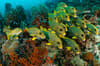
The reefs around Kri and towards Waisai offer some of Raja Ampat’s liveliest diving. At the renowned Cape Kri, sweetlips gather low on the slope while trevallies hunt through schools of fusiliers. Marine biologist Gerald Allen counted 374 fish species on a single dive here! Sardine Reef is another classic, where divers can watch shoals of snappers, sweetlips and fusiliers pulsing as predators charge through.
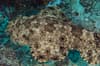
Out in deeper water, Blue Magic is an isolated pinnacle with steep sides covered in sponges and sea fans. Jacks and barracuda circle above it, and oceanic mantas visit the cleaning station. For a slower dive, follow the coral slope at Mioskon, where pygmy seahorses hide among the fans and tasselled wobbegongs rest beneath ledges.
West Dampier Strait
Around western Mansuar and Arborek, you can spend one dive watching reef mantas and the next beneath a village jetty. At Manta Sandy, rays glide in low over the sand before circling the cleaning station. A ranger station oversees visits, and divers watch from a designated area that gives the mantas room to approach. Nearby Manta Ridge can make for an exciting dive as the manta rays stack up in the current that flows over the reef.
At Arborek Jetty, light filters between coral-covered pilings and shoals gather in the shade beneath the boards. The reef continues beyond the jetty, and the village reefs at Sauwandarek and Yenbuba are well worth exploring too.
West Gam and northern Raja Ampat
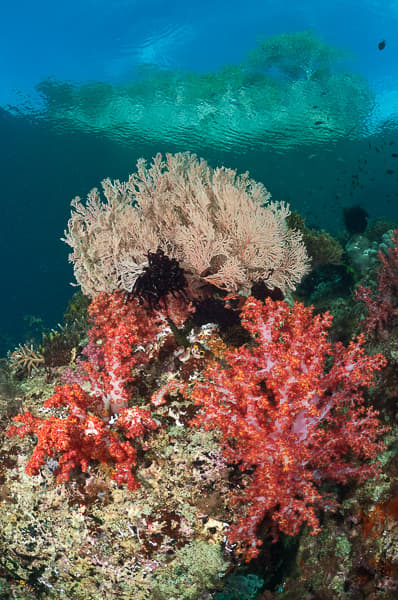
Around western Gam, the rainforest comes right down to the water. Orange and yellow soft corals cover the reef at Citrus Ridge, in the channel between Gam and Yanggefo, while currents draw schools of fish over Mayhem. The Passage is one of Raja Ampat’s most unusual dives. The narrow channel between Gam and Waigeo winds beneath limestone cliffs and overhanging trees, with sea fans and sponges growing almost at the surface.
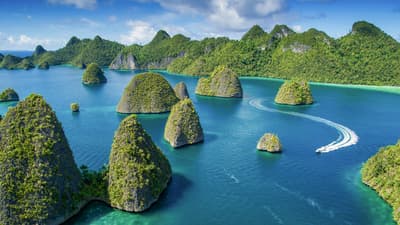
Farther north, mantas feed in the channels and visit cleaning stations at Eagle Rock, near Kawe. At Black Rock, fish gather around branching bushes of black coral, while sheltered Alyui Bay rewards a closer look for smaller marine life. Wayag’s limestone towers rise from a maze of turquoise lagoons farther north again.
Fam and Piaynemo
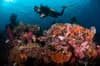
Melissa’s Garden is hard coral diving at its most spectacular. Branching corals spread across the shallow plateau, with tiny reef fish darting between them. Nearby My Reef, often sees trevallies hunt around a submerged reef crowded with schooling fish and Keruo Channel offers a drift between the limestone islands.
Batanta
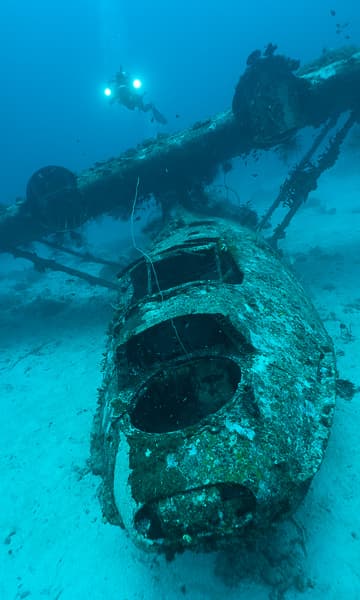
The islands off northern Batanta offer local reef diving and, from Wai, a Second World War P-47 aircraft wreck. For some of Raja Ampat’s most extraordinary critters, head to the sandy sites along the southern coast. At Algae Patch, what looks like a scrap of vegetation may turn out to be a ghost pipefish, while divers head to Happy Ending in search of mimic octopuses skimming across the sand.
Misool
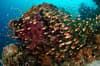
Misool’s best-known reefs lie among the ridges of karst limestone and chains of small islands to the south-east. At Four Kings, four pinnacles rise from connecting ridges like an underwater mountain range, their sides draped in soft corals and sea fans. Boo Windows features a shallow opening in the rock that frames the blue water beyond, while broad table corals spread across the surrounding reef.
At Magic Mountain, reef and oceanic mantas visit the cleaning stations, with jacks hunting through the shoals and sharks patrolling the reef below. In the Fiabacet islands, Nudi Rock rewards a closer look for pygmy seahorses and nudibranchs among the fans. Farther east, at Andiamo in the Daram Islands, coral-covered ridges connect two small islets and an offshore pinnacle.
For more details on individual sites and how to reach them, read our guide Raja Ampat’s best dive sites and how to dive them.
When to go - Raja Ampat's seasons
Raja Ampat’s main diving season runs from October to April. This is when most liveaboards explore the region, seas are generally calmer for longer crossings, and you have some of the best chances of seeing manta rays. Raja Ampat is hot and humid year-round, with daytime highs around 31°C and nights around 25°C. Rain can fall in any month, including during the peak diving season in December and January, but showers are often localised, and it can be sunny on one island while rain falls on another nearby.
Underwater visibility ranges from around 10–35 metres, varying between sites and with currents and plankton levels. Misool often has clearer water than the nutrient-rich reefs of the Dampier Strait. Plankton can reduce visibility, but it also attracts feeding manta rays, so the clearest water doesn’t always mean the best encounters.
The central and northern islands can be dived year-round. June and July are usually among the wetter months, and stronger winds from mid-June to mid-September can make exposed boat journeys choppy. Many liveaboards head west to other parts of Indonesia at this time of year, so there are fewer departures and far fewer other divers.
Misool’s diving season runs roughly from September to June. The south is more exposed to the south-east monsoon, which can make the open-water crossing rough, particularly in July and August.
Marine conservation in Raja Ampat
Dive tourism in Raja Ampat began on a small scale in the early 1990s, when pioneers such as Max Ammer worked with local Papuan guides to explore the reefs and establish diving on Kri. Protection grew through partnerships between local communities, conservation organisations and the government, with a network of seven marine protected areas declared in 2007. In southern Raja Ampat, Misool’s conservation story began in 2005 with an agreement between the resort’s founders and local communities to establish a no-take zone. A former shark-finning camp became the site of Misool Resort, and the surrounding reserve has since expanded to around 1,220 square kilometres. Ranger patrols and restrictions on fishing have helped fish and shark populations recover, contributing to the extraordinary marine life divers encounter today.
Resorts & liveaboards
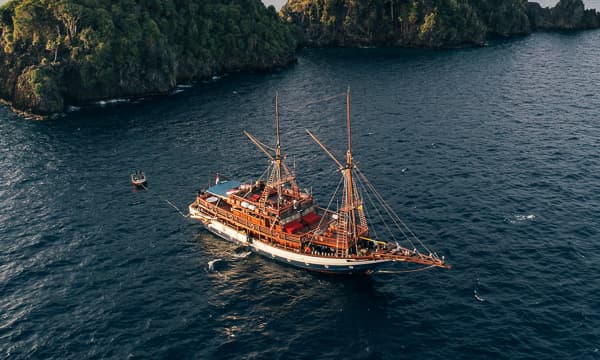
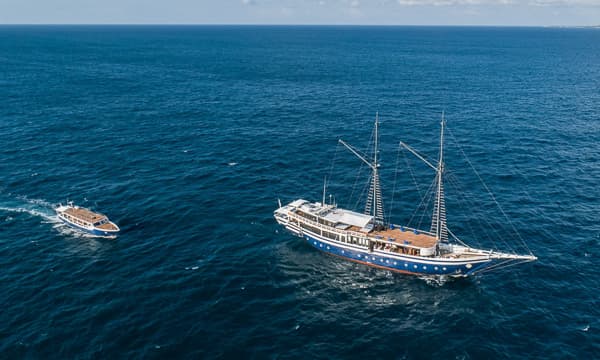
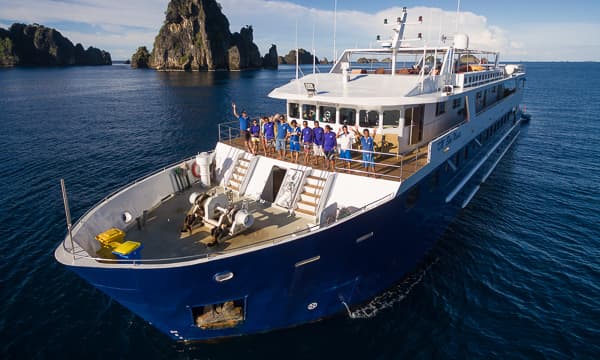
In its early days, Raja Ampat had just one dive resort and a handful of liveaboards that explored the islands. Today, the situation has changed considerably. There are now many liveaboards operating in Raja Ampat and quite a few dive resorts concentrated in and around the Dampier Strait. Visitors can even stay at a dive resort located on the remote Misool Island. But many believe liveaboards are the best way to explore Raja Ampat, as they cover more of the different island groups and the famous dive sites.
All of the Raja Ampat resorts and liveaboards featured by ZuBlu are relatively expensive in comparison to other destinations in Indonesia. And, while diving Raja Ampat on a budget is possible, we recommend professionally-managed resorts with a reputation for high standards and safety due to the remote location.
Dive resort, or liveaboard?
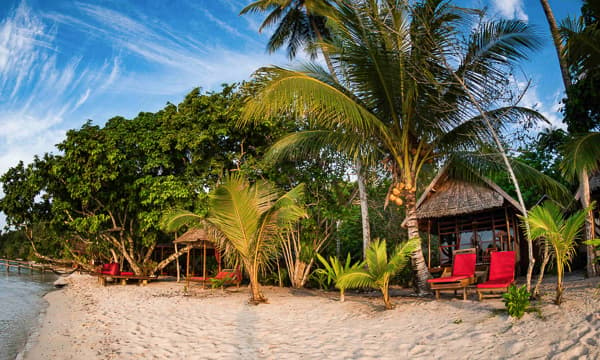
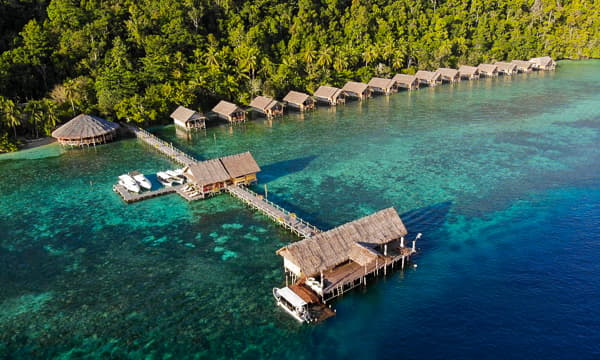
Choose a dive resort if you prefer the comfort and convenience of staying on land. You’ll explore less of Raja Ampat because your diving is within boat range of the resort, but you’ll have a beach and the resort’s facilities to come back to between dives. At some resorts you can do three or four dives a day, or skip an afternoon boat dive and explore the house reef at your own pace. If you’re travelling with snorkellers or non-divers, they can spend time on the beach or head off on excursions while you’re out diving.
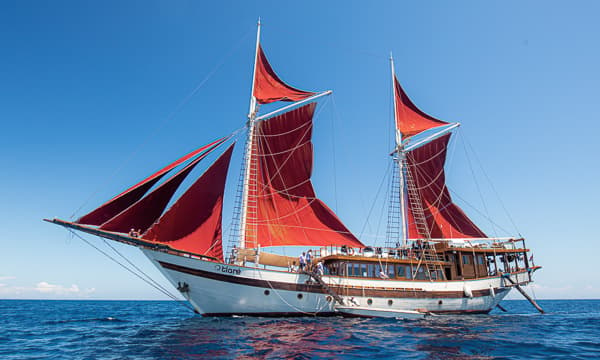
Choose a liveaboard if you want to see more of Raja Ampat in one trip. Boats will make longer crossings overnight, so you can spend one day diving the fish-filled reefs of the Dampier Strait and wake up the next morning among the limestone islands of Misool. While you’ll get a chance to make some excursions, you’ll spend much of your time between dives on board, with meals and dives following the boat’s schedule. If you’re prone to seasickness, consider how much time your route spends in open water.
Read our full guide to choosing a dive resort or liveaboard in Raja Ampat,
How long should you spend in Raja Ampat?
Stays of around a week gives you plenty of time to explore the Dampier Strait from a dive resort or join a central Raja Ampat liveaboard itinerary. From a resort, you can spend several days diving the local reefs and set aside a day for a longer excursion to Fam and Piaynemo. A central liveaboard can cover the eastern and western ends of the strait, as well as continuing to western Gam and Fam.
If you’d like to combine the Dampier Strait with either Wayag in the north or Misool in the south, look for a liveaboard of around 7–10 nights. To dive the central reefs, the far north and Misool on the same trip, allow around 10–12 nights and choose a route that specifically includes all three.
Read more about liveaboard itineraries in Raja Ampat in our guide here,
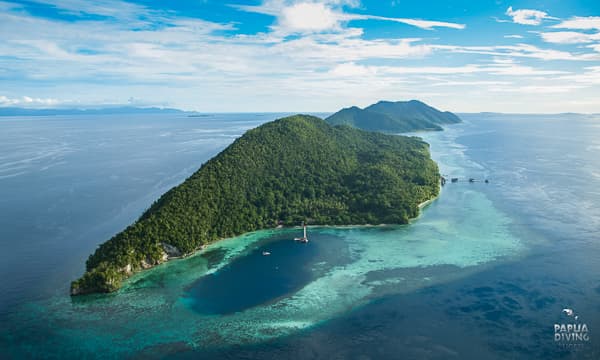
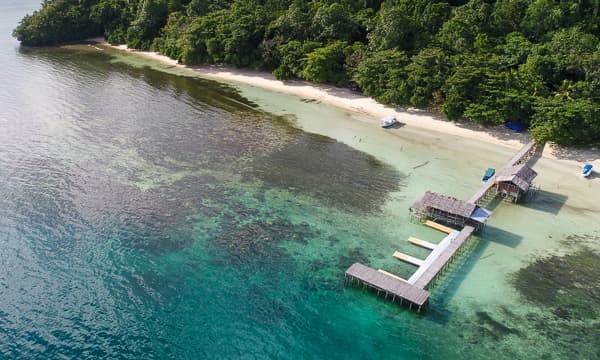
Raja Ampat dive resorts
Raja Ampat liveaboards
Travel & practical information
Getting there
Your journey to Raja Ampat begins in Sorong (SOQ), the gateway to the islands. Domestic flights connect Sorong with Jakarta, Denpasar, Makassar, Manado and Ambon. Plan to arrive early in the morning to meet your liveaboard departure, resort transfer or the first ferry to Waisai at 09:00. We recommend overnight flights from Jakarta or Bali, arriving in Sorong the following morning. And given the reliability of airlines in Indonesia, arriving a day early gives you time to rest after the journey and some flexibility in case of flight delays.
Joining your liveaboard
The vast majority of Raja Ampat liveaboards depart from Sorong. You’ll be collected at the airport and transferred to the port, then taken out to your boat. Some trips depart from Waisai, on Waigeo Island, which you can reach using the public ferry from Sorong.
Transfers are either included in your liveaboard package or charged separately. ZuBlu’s travel team will confirm the arrangements and include any additional costs in your quote.
Getting to your dive resort
Dive resorts arrange transfers either directly from Sorong by resort boat or using the public ferry to Waisai, followed by an onward transfer. Several resorts operate scheduled transfers on particular days, so these should guide your arrival and departure dates:
- Papua Explorers, Kri Eco Resort and Sorido Bay: Wednesdays and Sundays.
- Misool Eco Resort: Fridays and Sundays.
- Wai Resort: Mondays and Fridays.
- Lotus Papua Paradise: daily boat transfers.
- Dive Into Raja Ampat, Raja Ampat Biodiversity and Meridian Adventure Dive: daily transfers using the Sorong–Waisai ferry.
- Cove Eco Resort: Saturdays and Mondays, using the ferry to Waisai followed by a resort transfer.
Sorong–Waisai ferry
The public ferry runs daily, with departures at 09:00 and 14:00 in both directions. Sorong’s ferry terminal is around 15 minutes from the airport.
If your flight arrives after midday, we recommend staying overnight in Sorong and travelling to the islands the following morning. This allows some flexibility for delays rather than relying on a tight connection to the afternoon ferry. Your guest concierge can also advise on an overnight stay at the Swiss-Belhotel or Aston in Sorong.
ZuBlu’s travel team can advise you on what is or isn’t included and the cost, and will add the transfers to your quote. Once the booking is confirmed, your guest concierge will assist with planning any flights and transfers.
Marine park and visitor fees
Visitors to Raja Ampat pay two separate fees:
- Raja Ampat Marine Park Permit: Rp 700,000 per person.
- Raja Ampat Visitor Ticket: Rp 1,000,000 per person.
- Total of Rp 1,700,000 per person.
Fees can change without notice, so the total amount payable may differ from the price quoted when you book - the rate for the Visitor Ticket was last raised at the start of 2026.
These can be paid in Sorong on your way to the ferry or resort transfer. However, most liveaboards and dive resorts collect payment in advance and pay on your behalf, saving time on arrival. They may combine these with port fees, fuel surcharges and island or viewpoint entrance fees into a single payment. ZuBlu’s travel team will explain what’s included in your quote and what is payable separately.
You can also register and pay the Visitor Ticket in advance through the official Sipari Raja Ampat website.
Some islands and viewpoints charge separate entrance fees that aren’t included in your package. For resort guests, these can be paid at the resort when booking an excursion.
Things to do when you're not diving
Raja Ampat’s scenery above the water is every bit as memorable as its reefs. Forested limestone islands rise from turquoise lagoons, mangrove channels lead into sheltered bays, and birds of paradise display in the rainforest. Allow time for an excursion or two between diving days, or extend your stay to explore more of the islands.
Island viewpoints and lagoons. Climb the steps at Piaynemo for one of Raja Ampat’s most spectacular views, looking across a maze of green limestone islets and brilliant blue water. Trips from the Dampier Strait can combine the viewpoint with snorkelling around Fam. Farther north, Wayag offers equally dramatic scenery, but its remote location makes it better suited to a northern liveaboard itinerary than a day trip from a central resort.
Mangrove trips and kayaking. Explore the sheltered bays around Gam by boat or kayak, passing beneath overhanging branches and alongside limestone cliffs. Excursions into Kabui Bay or Hidden Bay reveal a quieter side of Raja Ampat, with narrow waterways, forested shores and opportunities to watch birds among the mangroves.
Birdwatching. An early morning forest walk with a local guide offers the chance to see red birds of paradise at their display trees on Batanta, Gam or Waigeo. Waigeo is also home to the extraordinary Wilson’s bird of paradise. These excursions are a highlight for wildlife enthusiasts, with the sounds of the forest waking around you adding to the experience.
Kali Biru, the Blue River. On Waigeo, near Warsambin village and Mayalibit Bay, Kali Biru is known for its remarkably clear, blue freshwater pools surrounded by dense forest. The excursion combines a boat journey with a short walk to the river, where a cool swim makes a refreshing change from the sea. It is particularly convenient for guests staying around Waisai.
Village visits and snorkelling. A visit to Arborek offers time to walk through the village and snorkel around its famous jetty. Elsewhere, shallow coral gardens, sheltered beaches and resort house reefs make it easy to enjoy the water without scuba equipment.
The excursions within reach will depend on where you're staying or your liveaboard's route. ZuBlu’s travel team can help you choose a stay that brings together the diving and island experiences you most want to enjoy.
Reviews
Reiko R
The Banda Sea crossing and Misool had pristine reefs and excellent very abundant fish life. Really some of the best dive sites I have ever...
Orlando K
There’s not enough words to encapsulate a place like Raja - it definitely is one of those places that needs to be experienced to believe...
Eric R
Raja Ampat is simply the best diving I have done in over 30 years! Go now! We have been diving for 30+ years (almost exclusively...
Antony W
For us, the best part of the diving was spotting mandarin fish, blue ring octopus and epaulette shark several times on the local night dive.
Stephanie W
My diving was far superior her to what I had on my liveaboard that cost 4 times the price. I saw many more, and better...